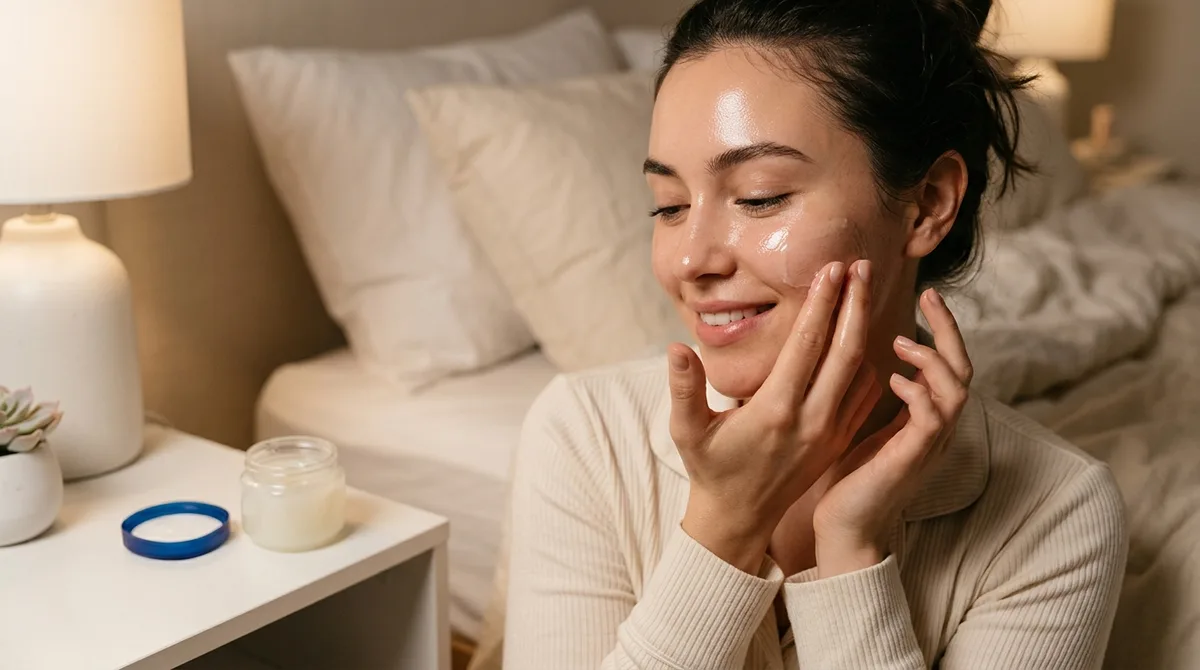
If you have scrolled skincare TikTok lately, you have seen someone smear their face with a glossy layer of balm, grin at the camera, and go to bed looking faintly like a glazed doughnut. They call it slugging, and they swear they wake up with soft, plump, dewy skin. The name comes from the slug-like sheen the balm leaves behind. Charming, no. Effective, often yes.
Here is the part the trend videos skip: slugging is not new, and it is not magic. Dermatologists have used the exact same occlusive technique for decades to protect dry and damaged skin. Done right, on the right skin, it genuinely works. Done wrong, it is a fast route to clogged pores. This is everything a beginner needs to slug safely.
Why TikTok fell for it
Most viral skincare hacks are expensive, complicated, or quietly useless. Slugging is none of those, which is exactly why it spread. The hero product costs a few dollars and is already in most bathroom cabinets. The before-and-after is dramatic and instant, dull, tight skin at night transformed into soft and dewy by morning, which is catnip for short video. And unusually for a TikTok trend, dermatologists largely backed it up rather than warning people off, because the underlying science is decades old and sound. A cheap product, a visible payoff, and expert cosign is a rare trifecta, and it sent slugging from a niche K-beauty step to a global phenomenon.
What slugging actually is
Slugging means applying a petrolatum-based occlusive, petroleum jelly or a healing balm, as the very last step of your nighttime routine. That is the whole technique. The occlusive forms a thin film over everything you applied beforehand and holds it in place while you sleep.
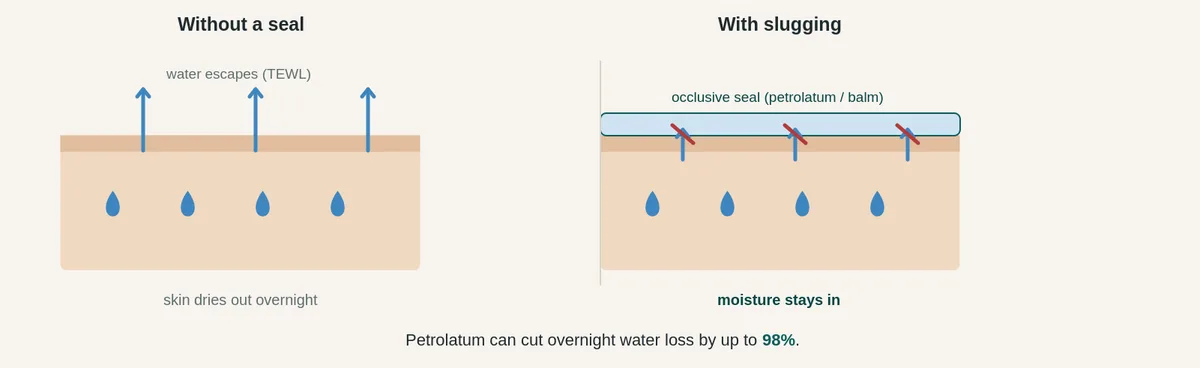
The science is barrier care, not glamour. Your skin constantly loses water to the air through a process called transepidermal water loss, or TEWL, and that loss speeds up when your barrier is stressed by cold weather, over-exfoliation, or harsh actives. An occlusive seal slows that escape dramatically. Petrolatum is the gold standard here: it can reduce water loss by up to 98%, which is why it turns up in almost every barrier-repair routine dermatologists prescribe. With less water escaping overnight, the barrier gets the calm, humid environment it needs to repair itself.
The one thing everyone gets wrong
Slugging does not moisturise your skin. Read that again, because it is the mistake behind most disappointing results. Petrolatum is a sealant, not a source of hydration. If you slug over bare skin, all you trap is your own facial oil. The magic only happens when there is something worth sealing in underneath: a humectant like hyaluronic acid to draw in water, and a moisturiser to soften and feed the barrier. Slugging is the lid on the jar, not the jar.
How to slug, step by step
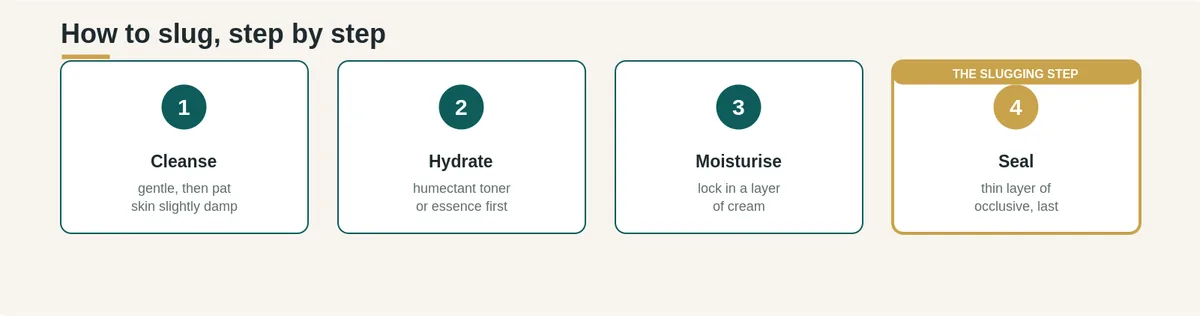
The routine is simple. Cleanse gently and leave your skin very slightly damp rather than bone dry. Apply a hydrating layer, a humectant toner or essence, so there is moisture for the seal to trap. Follow with your normal moisturiser. Then, as the final step, smooth a thin, pea-sized amount of occlusive over your face. You want a sheer veil, not a thick mask. In the morning, cleanse it off and carry on as usual.
A few practical notes make it pleasant rather than messy. Slugging feels greasy, so most people do it two or three nights a week rather than every night, or only on dry zones like the cheeks, around the nose, and the eyes. Balm transfers onto fabric, so keep a dedicated pillowcase for slugging nights. And if overnight feels like too much, try short-contact slugging: leave the occlusive on for a couple of hours in the evening, then wash it off before bed.
What to use
Plain petroleum jelly, such as Vaseline, is essentially 100% petrolatum and the most reliable choice. Aquaphor is around 41% petrolatum blended with mineral oil and lanolin, though anyone with a wool sensitivity should note the lanolin. Balms that pair petrolatum with ceramides, like CeraVe Healing Ointment, do double duty by helping replenish barrier lipids rather than only sealing. One honest caveat worth knowing: pure petrolatum is excellent at preventing water loss but is not absorbed and does not itself rebuild the barrier, which is why ceramide-rich balms are a smart upgrade if you have the choice.
If you want to keep it Korean, the K-beauty market has leaned into slugging with lighter, more elegant occlusive balms designed for the face rather than repurposed ointments. Many pair the sealing effect with barrier-loving extras like ceramides, panthenol, or centella so the step does more than trap water. They tend to feel less heavy than a thick smear of petroleum jelly, which makes nightly use more bearable for normal and combination skin. Whatever you reach for, the principle is the same: the occlusive is the seal, and the goodness it locks in comes from the layers underneath.
Should you slug? A skin-type guide
| Skin type | Slug? | Why |
|---|---|---|
| Dry / dehydrated | Yes | Seals in moisture; biggest visible payoff |
| Sensitive / barrier-damaged | Yes | Petrolatum is low-risk and protective |
| Normal / combination | Now and then | Fine on dry patches or in winter |
| Oily | Go easy | Can feel heavy and trap oil |
| Acne-prone / congested | Usually skip | Occlusion can trap sebum and worsen breakouts |
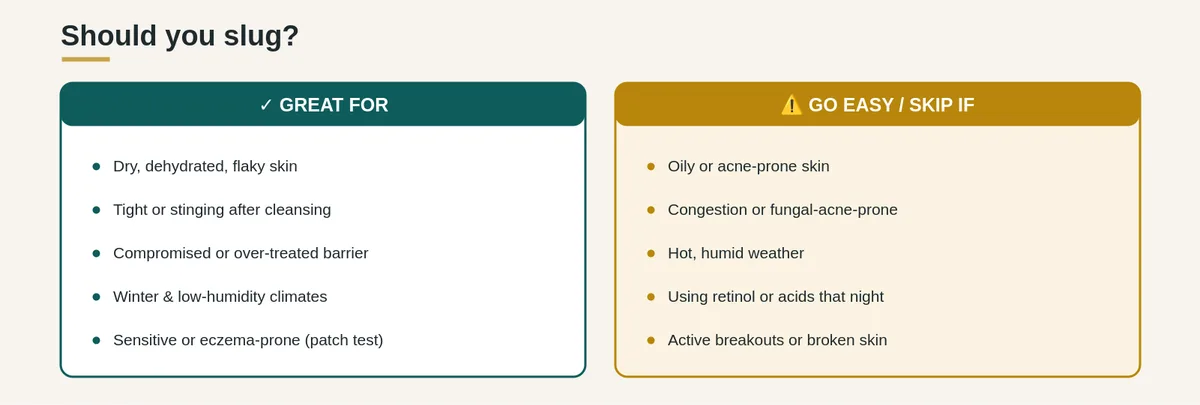
The pattern is straightforward. Dry, dehydrated, sensitive, and barrier-damaged skin gets the most out of slugging, especially in winter or a dry climate. Oily and acne-prone skin should be cautious: petrolatum itself is not technically pore-clogging, but sealing a layer over an oily, congested face can trap sebum and bacteria and tip you into breakouts. If that is your skin, slug only on dry patches, if at all.
The mistakes that cause breakouts
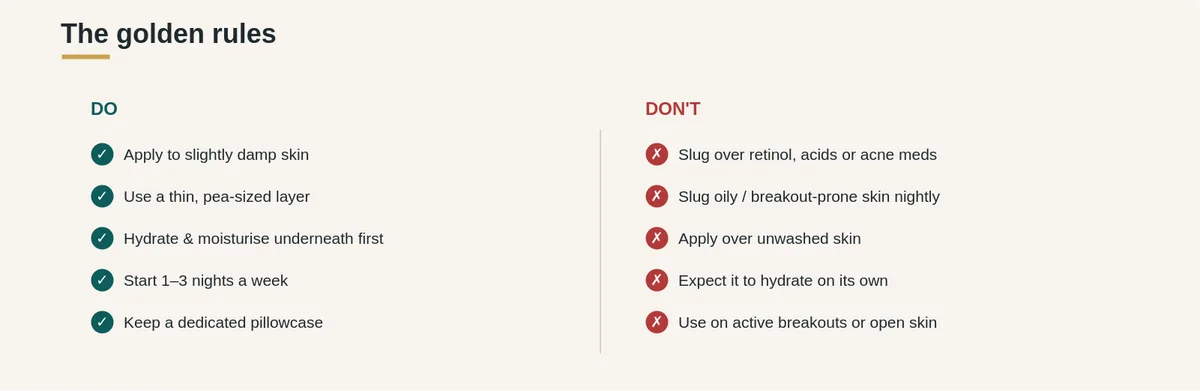
Most slugging horror stories come down to a handful of avoidable errors. The biggest one is slugging over active ingredients. Because an occlusive seals in everything beneath it, layering it over retinoids, exfoliating acids, or prescription acne treatments dramatically increases how much penetrates the skin, which can turn a tolerable active into a recipe for irritation and peeling. Keep slugging nights and strong-active nights separate.
The rest are simpler. Slugging unwashed skin traps the day's grime against your face. Using too thick a layer makes everything feel suffocating and greasy without working any better. And slugging oily skin every single night is asking for congestion. If you ever notice new breakouts, rashes, discolouration, or irritation, stop and let your skin reset. If you have eczema or psoriasis, occlusives often help, but check with a dermatologist first, and patch test any new balm on your inner wrist for a day or two before putting it on your face.
Realistic expectations
Slugging is a barrier tool, not a treatment. It will leave dry skin softer, plumper, and less tight by morning, and over time it supports a healthier barrier. It will not clear acne, fade dark spots, smooth deep wrinkles, or replace sunscreen and actual treatment products. Think of it as the finishing move that makes the rest of your routine work harder, not a standalone fix.
As for timing, the morning-after softness is immediate, that is the moisture you trapped overnight. The deeper benefit, a calmer and more resilient barrier, builds over a few weeks of consistent, sensible use. If your skin still feels tight, flaky, or reactive after a month of slugging a couple of nights a week, the problem is probably upstream in your routine or worth a dermatologist's eyes, not a reason to slug harder.
Because slugging only seals in what is underneath, what you layer first is what really matters. Build that base around proven barrier-supporting ingredients like centella, mugwort, and rice, and the occlusive will lock their benefits in overnight. It also slots neatly into the wider move toward simpler, smarter Korean routines.
The takeaway
Slugging earned its TikTok fame the honest way: it is a cheap, low-risk, dermatologist-backed method that genuinely helps dry and stressed skin hold onto moisture. The rules are easy. Slug over hydration, never over actives. Keep the layer thin. Match it to your skin type, and ease off if you are oily or breaking out. Do that, and the glazed-doughnut look at bedtime really does pay off by morning.